What does 7 kg CO₂ for a T-shirt actually mean?
25 June 2026 · 4 min read · Kleerdrobe
Where Kleerdrobe has enough category data, it can show an estimated CO₂e production footprint and a separate water estimate. These are rough model outputs, not measurements of the item. But unless you work in sustainability, even that context is abstract. Seven kilograms of CO₂e — is that a lot or a little?
This article unpacks what those numbers represent, where they come from, and how to actually use them.
Where the number comes from
When researchers want to understand the environmental cost of a product, they use a method called Life Cycle Assessment (LCA). It traces every input and emission from raw material to finished product — and sometimes all the way to disposal.
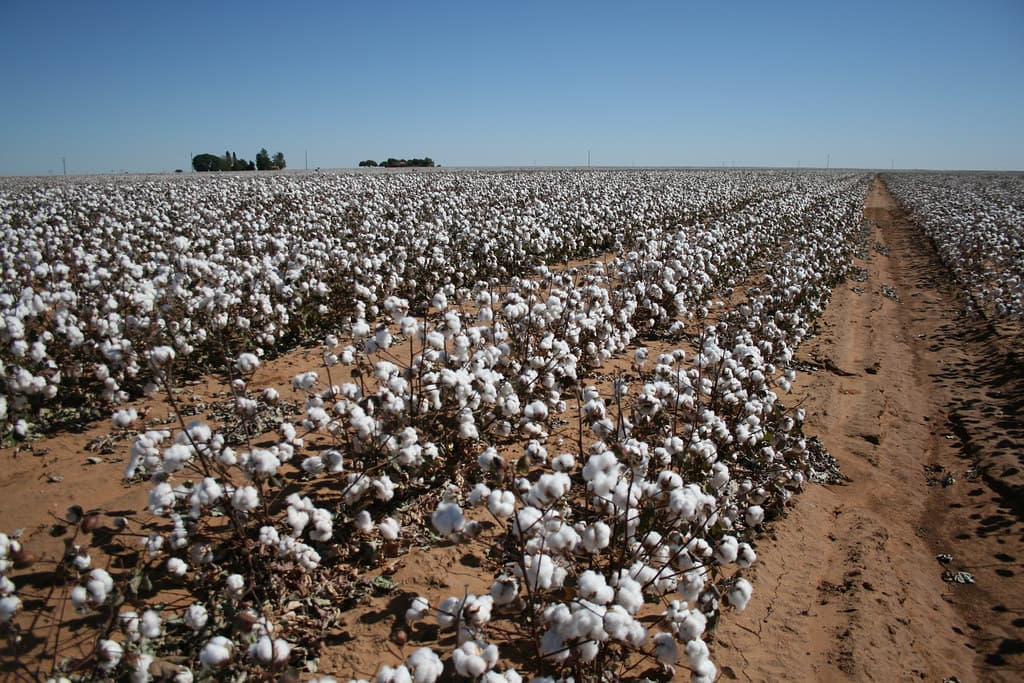
For a cotton T-shirt, that journey roughly looks like this: growing the cotton (fertiliser, irrigation, land use), spinning it into yarn, knitting or weaving the fabric, dyeing and finishing (chemicals, heat, water), cutting and sewing, and shipping it to a warehouse near you.
Each of those steps consumes energy and water, and produces emissions. Add them up, and you get the production footprint.
Our baseline for a T-shirt — 7 kg CO₂e and about 2,700 litres of water — comes from cross-referencing three independent sources: the French government’s Ecobalyse tool, Carbonfact’s category medians, and the Mistra Future Fashion research programme. It represents a typical T-shirt made from conventional cotton, manufactured in Asia, with standard dyeing processes.
Putting it in perspective
Seven kilograms of CO₂e is roughly equivalent to driving 41 kilometres in an average petrol car under the conversion factor used by Kleerdrobe. Separately, 2,700 litres of water is about 42 showers at 65 litres each. Carbon and water are different indicators; these comparisons provide scale but must not be combined into one score.
A single category estimate does not describe a whole wardrobe. It is most useful as rough context alongside how often an item will be worn, repaired and kept in use.
Why two items in the same category can differ
Real product footprints can differ for many reasons. Three are worth understanding.
Material can matter.Published lifecycle studies show differences between fibres, but the result depends on geography, farming, processing and the study boundary. Kleerdrobe adjusts only for supported broad material signals. A listing that merely says “organic” or “recycled” is not given a numerical discount when the share and certification cannot be verified.
Manufacturing energy.The electricity and heat sources used for spinning, dyeing and finishing can affect production emissions. Listings rarely provide enough facility-level data to apply that difference responsibly, so Kleerdrobe’s current estimate does not adjust for manufacturing geography.
Durability changes the per-wear picture.A €10 T-shirt worn five times before it falls apart has a far higher footprint per wear than a €40 T-shirt worn two hundred times, if their production footprints were otherwise equal. Kleerdrobe does not currently predict the lifespan of a specific garment.
What we show — and what we don’t
We want to be honest about what these numbers are and aren’t.
They are category-level estimates based on documented public LCA data, adjusted for a material signal where the model can support that adjustment. They offer rough context within comparable categories; they cannot establish the exact difference between two products.
They are notcertified product-level assessments. We haven’t visited the factory. We haven’t verified the supply chain. The brand hasn’t confirmed our numbers. When data is missing — and it often is — we fall back to a documented category baseline or flag a rough catalogue-wide baseline. Either can overstate or understate the impact of the real product.
We keep these two things visually distinct on the site. The footprint estimate is always labelled as such, and the methodology page explains every assumption.
How to actually use this
The point isn’t to agonise over every kilogram. It’s to make the invisible visible, so you can make choices with open eyes.
Three practical takeaways:
Keeping a garment you already own in use often avoids the production of a replacement. Before buying anything new, the cost-per-wear calculation is worth a thought.
When you do buy, material and durability are relevant alongside price and fit. A listing may suggest a material; it rarely proves how long the finished garment will last.
Comparison is useful only within the method’s limits. Two similar listings can be placed side by side, but a modelled gap should not be presented as a measured product difference.
These estimates are one input, not a verdict. Their value depends on keeping the assumptions and uncertainty visible.